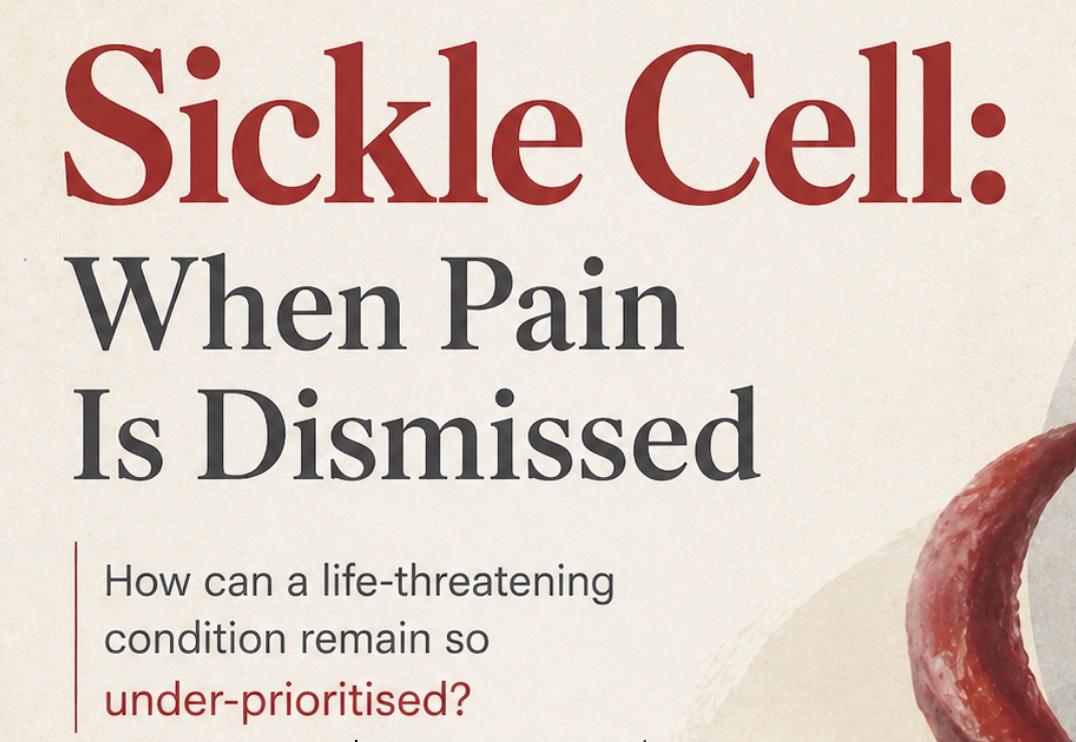
What if you lived with episodes of pain so severe that it felt as though your bones were being crushed from the inside? Would you want your suffering to be believed?
Listen to the full episode on Spotify below, and subscribe to the podcast for more conversations exploring the human stories behind important issues:
For nearly 8 million people worldwide living with Sickle Cell Disease (SCD), this is a reality. SCD is an inherited genetic condition that affects red blood cells, causing them to become rigid and sickle-shaped rather than round and flexible. As a result, these cells can block blood vessels and struggle to deliver oxygen throughout the body, leading to painful crises and serious health complications.
Because pain crises are often unpredictable and debilitating, access to timely and appropriate medical care is essential. Yet many people living with Sickle Cell Disease continue to face misunderstanding, delayed treatment, and disbelief when seeking help.
To better understand the realities of living with the condition, I sat down with Dr Linda van Keimpema, co-founder of the award-winning Invisible Warrior project. Through education, community engagement, and patient advocacy, the project works to raise awareness of Sickle Cell Disease and ensure that the voices of those living with it are heard.
In our conversation, we explore not only the science behind Sickle Cell Disease, but also the human consequences of a healthcare system that does not always recognise or respond appropriately to patients’ needs. From painful misconceptions surrounding the condition to the devastating story of Evan Nathan Smith, this episode highlights why greater awareness, better training, and more equitable care are urgently needed.
Sickle Cell Disease predominantly affects people of African, Caribbean, Middle Eastern, South Asian, and Mediterranean heritage. The condition’s prevalence is linked to geographical ancestry because carrying a single copy of the sickle cell gene—known as sickle cell trait—provides partial protection against severe malaria. This evolutionary advantage allowed the gene to persist in regions where malaria was historically widespread. Sickle Cell Disease occurs when a person inherits two copies of the gene, one from each parent.
The condition can cause a wide range of symptoms, including severe pain crises, chronic anaemia, extreme fatigue, shortness of breath, recurrent infections, and swelling of the hands and feet. These symptoms occur because sickled red blood cells can obstruct blood flow and break down more quickly than healthy cells.
The consequences can also be life-threatening. When blood vessels become blocked, vital organs may be deprived of oxygen, increasing the risk of organ damage, organ failure, and stroke. SCD can also damage the spleen, leaving the immune system significantly weakened. As a result, individuals—particularly young children—are more vulnerable to serious bacterial infections such as pneumonia and meningitis.
In this episode, we explore not only the science behind Sickle Cell Disease, but also the human impact of a healthcare system that does not always recognise or respond appropriately to the condition. We discuss the devastating consequences that can arise from gaps in medical training and awareness, including the story of Evan Nathan Smith, a young man whose death after seeking treatment for a sickle cell pain crisis became a powerful example of the consequences of inadequate awareness and care.
What emerged from this conversation was a powerful reminder that awareness is not simply about knowledge—it can be the difference between being believed and being overlooked.
If you’d like to hear the full conversation with Dr Linda van Keimpema, you can listen to the episode above or on Spotify.






Leave a Reply